A personal robot has to earn its space, not only move around a room. For a buyer, the real cost includes the robot, setup, repairs, software, and the time needed to supervise it.
Quick read
- The purchase price is only one part of the bill.
- Home tasks are still hard because rooms, objects, and people change position.
- A robot that needs regular human help can cost more than its task is worth.
The price on the box is not the full cost
Personal robots need parts that can sense rooms, move safely, handle objects, and recover when a task goes wrong.
Those parts cost more than the fixed hardware in a device such as a speaker or camera because the robot must deal with physical contact.
A robot vacuum can stay close to the floor and repeat a known route. Picking up laundry needs a camera, moving joints, a gripper, and software that can judge where to hold each item. Each added task brings more hardware and more chances for repair.
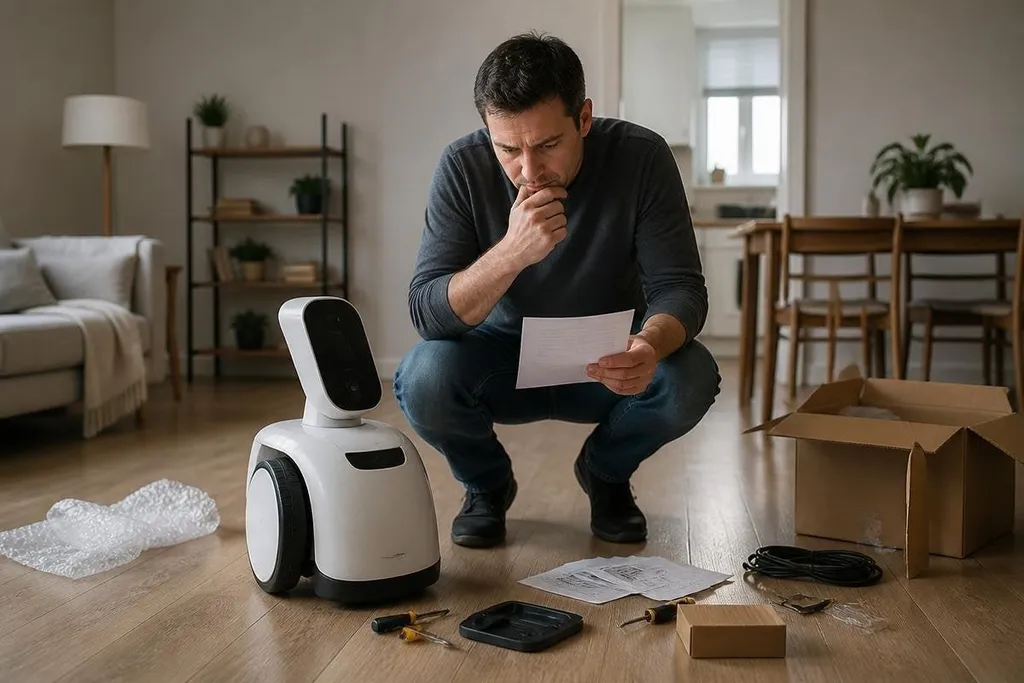
The buyer also pays for setup. That may include charging equipment, room mapping, network access, software updates, replacement parts, and a service plan. If a company sends a technician or requires remote supervision, the owner pays in money or time.
That second bill matters most when the robot handles a small task. Saving a few minutes of sweeping does not carry the same value as helping a person with a daily care task, but the machine may need many of the same sensors and motors.
Homes are harder than factories
Factories lower robot costs by controlling the floor, the objects, and the work sequence. A personal robot enters a home with steps, rugs, narrow spaces, pets, children, glass, cables, and objects placed in new locations.
That variety raises the amount of software the robot needs. It also makes testing harder. A robot may pick up a cup on a clear table and fail when the cup sits beside a book, under a shadow, or near the edge.
Human help can cover those failures. Yet a robot that depends on frequent teleoperation, where a person controls it from another location, shifts the job rather than removing it. The owner may still need to watch the task, approve an action, or fix the robot after a collision.
Teleoperation turns the sticker price into a staffing question. Reporting from Robot24.com can place the robot’s advertised task beside the person-hours needed to watch it and fix it. That labor cost leads directly to the business model behind the bill.
The business model shapes the bill
A company can sell the robot once, charge a monthly fee, or combine both. A monthly plan may cover software and support, but it also makes the total cost harder to compare with a normal household appliance.
The buyer needs to ask what happens when the plan ends. Does the robot still move? Can it run its main task without a remote server? Are software updates included? Who pays when a motor, camera, battery, or gripper fails?
Privacy adds another cost that does not appear on a receipt. A home robot may process camera or microphone data to understand its surroundings. Local processing can reduce the need to send data away, but the hardware may cost more and the robot may have fewer software features.
There is also a resale issue. A phone can keep working after its maker stops selling it. A connected robot may lose features if its app, server, or support service shuts down.
A buyer's cost check
Before paying for a personal robot, check these points:
- Task value: Write down the task and the minutes it saves each week.
- Human input: Ask how often a person must approve, guide, or reset it.
- Repair path: Find the price and wait time for batteries, motors, sensors, and grippers.
- Software terms: Check which functions need a subscription or an internet connection.
- Home fit: Measure doors, floor gaps, stairs, charging space, and the robot's turning area.
- Failure plan: Decide who will fix the task when the robot stops.
This check changes the buying question from “Can it do the demo?” to “What will it cost to keep doing the job?” That is the measure a living room creates, and a short video rarely answers it.
Personal robotics can become less costly as companies sell more units and reuse hardware across models. That result is not guaranteed. Until service, repair, and human supervision are clear, I'd wait before paying a high price for a robot built around a narrow household task.
The first personal robot worth buying will need a published total cost, a clear repair plan, and months of useful work without a person standing by.